Using Your Phone Overseas: Carrier International Plans or Local SIM?
By Jeff Lowe • February 19, 2026
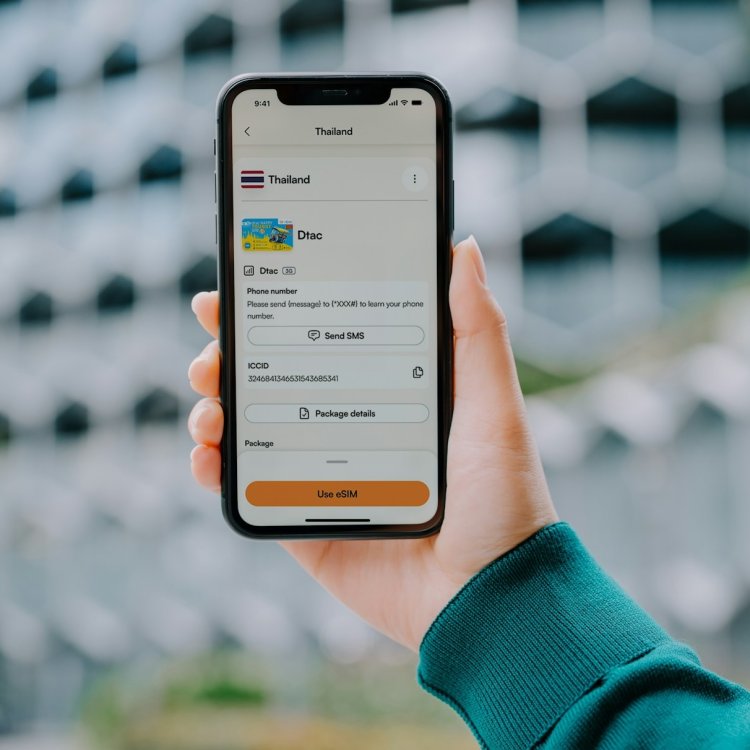
Traveling internationally with your cell phone doesn’t have to be complicated — but it does require a little planning. The difference between a smooth, connected trip and a surprise $300 bill often comes down to one decision: use your carrier’s international plan or buy a local SIM card?
Over the years, Colleen and I have done both. Sometimes convenience wins. Other times, a local SIM just makes more sense. The right choice depends on where you’re going, how long you’ll be there, and how much connectivity you really need.
So let’s break it down in plain English — what your options are, how modern phones handle SIM cards, and when it makes sense to use one strategy over another.
Understanding Your Options for International Phone Use
When you travel abroad, you typically have three main options:
-
Use your U.S. carrier’s international roaming plan
-
Buy a local physical SIM card at your destination
-
Install an international eSIM (digital SIM)
All three will get you connected. The question is cost, speed, convenience, and flexibility.
When Your Carrier’s International Plan Makes Sense
Most major U.S. carriers now offer international travel passes — often around $10–$12 per day — that let you use your phone abroad much like you do at home. Your calls, texts, and data just work.
We’ve used this option in places like Mexico, the U.S. Virgin Islands, and Panama. It wasn’t blazing-fast data, but it was completely usable. Maps loaded. Messages went through. We didn’t have to fiddle with settings or swap SIM cards.
Here’s when this option works best:
-
Short trips (under 7–10 days)
-
Cruise stops or quick international getaways
-
Business trips where reliability matters
-
When you don’t want to change anything on your phone
-
If you absolutely need your primary phone number active
The biggest advantage? Simplicity.
You land, turn your phone on, and it works. No hunting for kiosks. No language barrier issues. No worrying about whether your phone is unlocked.
The downside? Cost can add up quickly, especially for longer trips. And in our experience, data speeds sometimes felt throttled compared to local networks.
When Buying a Local SIM (or eSIM) Makes More Sense
When Colleen and I visited our daughter while she was studying abroad in South Korea, we each purchased a local SIM card. It was surprisingly easy — and it worked perfectly.
The speeds were fast. Coverage was excellent. And the cost for the week was very reasonable.
This option is often ideal when:
-
You’re staying a week or longer
-
You’ll use a lot of data (maps, uploads, hotspot, etc.)
-
You’re in a country with strong local mobile infrastructure
-
You want the fastest possible data speeds
For example:
Western Europe
If you’re visiting multiple countries — say France, Italy, and Germany — many regional SIMs work across the EU without additional roaming charges. That can be far cheaper than paying a daily U.S. roaming fee.
Japan
Local SIMs or eSIMs are often dramatically cheaper than U.S. carrier passes and offer faster speeds.
Australia or New Zealand
Longer stays make prepaid local plans very economical.
In high-tech countries like South Korea, the experience was seamless. Honestly, it felt no different than being at home.
How Modern Phones Handle SIMs (Simple Explainer)
This part used to be complicated. It’s not anymore.
Physical SIM Card
This is the small plastic chip inside your phone that connects you to your carrier.
When you buy a local SIM:
-
You remove your current SIM
-
Insert the new one
-
Restart your phone
-
Done
Your phone temporarily operates under a new phone number and carrier.
eSIM (Embedded SIM)
Most modern phones now support eSIM. This is a digital SIM that you download instead of physically inserting anything.
Benefits:
-
No tiny plastic card to lose
-
You can store multiple SIM profiles
-
Easy to switch back and forth
Dual SIM Capability
Many newer phones allow you to:
-
Keep your primary number active
-
Use a second SIM (physical or eSIM) for data
This is powerful.
For example, you can:
-
Use a local SIM for fast, cheap data
-
Keep your U.S. number active for important texts (like bank verification codes)
Before traveling, check:
-
Is your phone unlocked?
-
Does it support eSIM?
-
Does it support dual SIM mode?
If your phone is locked to your carrier, local SIM cards won’t work.
Should You Just Buy Data — Or Keep Your Primary Number Active?
This is where it gets interesting.
Data-Only Can Be Enough
If you primarily communicate through:
-
iMessage
-
WhatsApp
-
FaceTime
-
Email
-
Social media
Then a data-only SIM might be completely fine.
Your apps will still function using your regular contacts. Many travelers don’t even notice their actual phone number changed.
Reasons to Keep Your Primary Number Active
However, there are situations where you’ll want your regular number working:
-
Two-factor authentication texts (banking, financial accounts)
-
Business calls
-
Emergency contact reliability
-
If someone back home doesn’t use messaging apps
Some carriers allow Wi-Fi calling internationally, which can help — but it’s not always guaranteed.
If you’re traveling for work or managing financial accounts regularly, keeping your primary number active may be worth the extra cost.
Real-World Cost Comparison
Let’s look at a few scenarios.
5-Day Trip to Mexico
-
Carrier travel pass: $10/day = $50
-
Local SIM: $20–$40
Convenience probably wins here. We chose the carrier option in Mexico and were perfectly fine.
7-Day Trip to South Korea
-
Carrier plan: $70+
-
Local SIM: Often less expensive, better speeds
We chose local SIMs in South Korea and were very happy with that decision.
14-Day Europe Trip
-
Carrier pass: $140+
-
Regional SIM: Often $30–$60
This is where local SIMs really shine.
30-Day Stay Abroad
Local SIM or eSIM is almost always the smarter financial decision.
Common Mistakes to Avoid
Before you board the plane, make sure you:
-
Confirm your phone is unlocked
-
Check compatibility with foreign networks
-
Download any necessary eSIM profiles in advance
-
Understand your carrier’s daily cap rules
-
Turn off background data-hungry apps
And here’s one big one: don’t assume Wi-Fi will solve everything. Airports, trains, and public networks can be unreliable or insecure.
Quick Decision Guide
If this sounds like too many variables, here’s a simple cheat sheet:
Use Your Carrier’s International Plan If:
-
You’re traveling less than a week
-
You value convenience above all
-
You need your home phone number active
-
You don’t want to change settings
Buy a Local SIM or eSIM If:
-
You’re traveling 7+ days
-
You want faster data
-
You’re visiting multiple countries in one region
-
You want to minimize costs on longer stays
Staying Connected Without Stress
At the end of the day, international cell phone planning isn’t about technology — it’s about peace of mind.
We’ve had smooth experiences both ways. In Mexico, Panama, and the Virgin Islands, the convenience of simply using our carrier was worth it. In South Korea, buying local SIMs gave us better performance and saved money.
There’s no universal answer. The best choice depends on your destination, length of stay, and how you personally use your phone.
So before your next trip, take five minutes and do the math. Think about how much data you’ll use. Decide whether keeping your primary number active truly matters.
A little preparation upfront can save you money — and a whole lot of frustration — once you land.